
TBT...

Anybody recognize these???
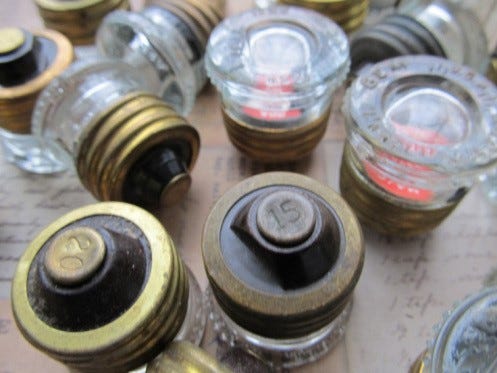
Back in the day before ‘breakers’ these were what you had in your house...
They weren’t called FUSE boxes for nothing...LOL
And an ‘emergency’ fuse was a real copper penny! As a high school kid, I helped a friend’s grandpa restore a couple of old houses, including rewiring them. We were pulling out CLOTH wrapped wire that dated from the early 20th century, and fuse boxes where you could literally see the burn marks inside the box from fuses arcing as they’d blown over the years...
I’m still amazed those houses hadn’t burned to the ground over the years...
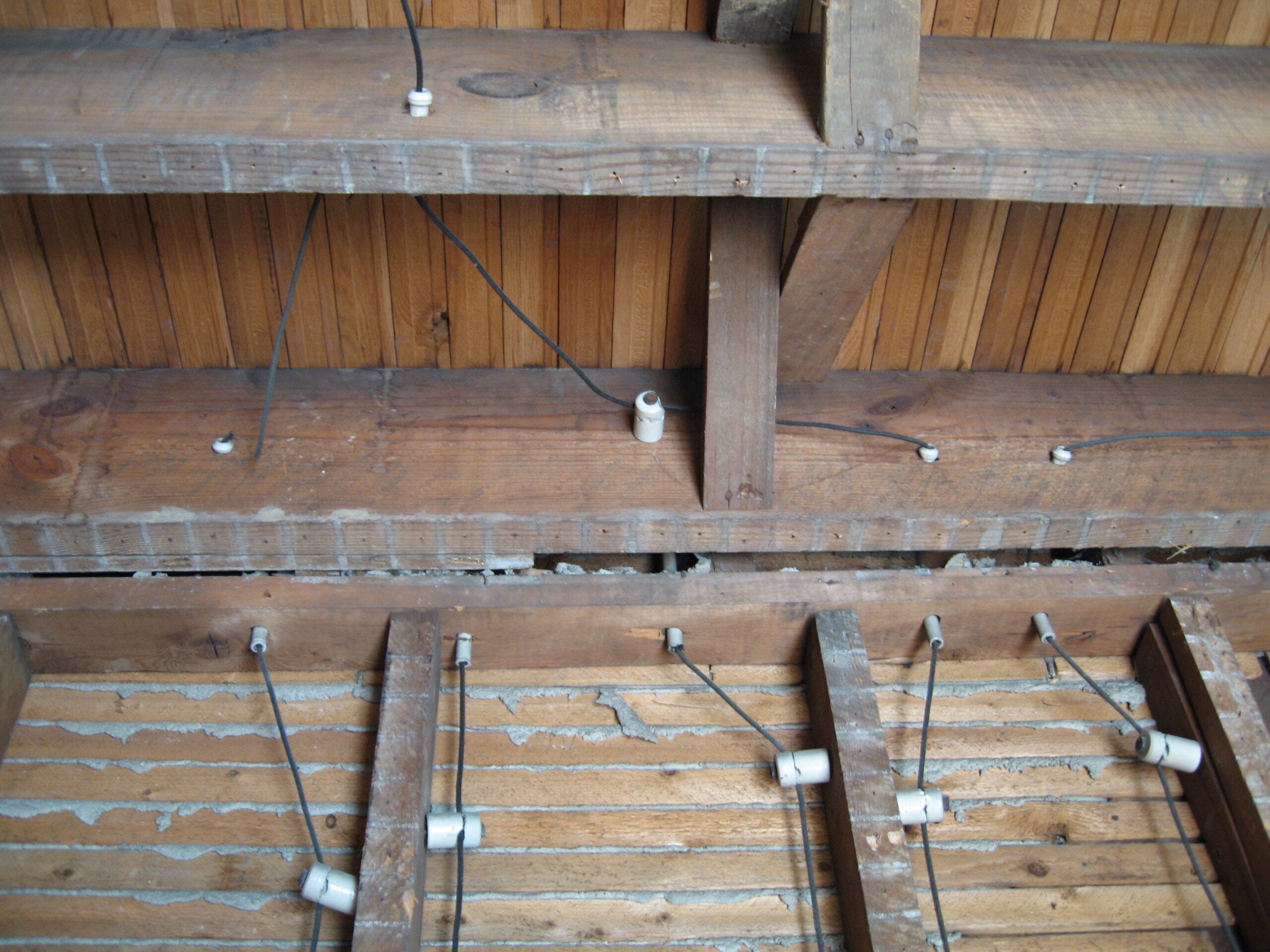
Especially with ‘this’ wiring...
Creative Commons CC-BY-SA-3.0-migrated
Known as knob and tube, it consisted of ceramic knobs were cylindrical and generally nailed directly into the wall studs or joists. The knob was used to secure and anchor the wire, seperating the wire from potentially combustible framework, and ensured that wires were not subject to excessive tension. Because the wires were suspended in air, they could dissipate heat well.
Ceramic tubes were inserted into holes bored in wall studs or floor joists, and the wires were directed through them. This kept the wires from coming into contact with the wood framing members and from being compressed by the wood as the house settled.
OBTW, the ‘maximum’ safe current was no more than ten amps with knob and tube, and the wires were cloth wrapped in most cases...
Today, it’s not unusual to see 30 amp up to 50 amp circuits in homes...
Breakers are more convenient, but fuses are more reliable - they don't require regular maintenance and they don't get stuck closed. You still see them in some places.
The house I grew up in was built in the 1700s. Walking through the basement and house was seeing the illustrated history of electricity (knob and tube through Romex) as well as heating (fireplaces through oil boiler and radiators eras}.
I have worked in a home that was on our local "Historic Registry" that maintains all its original style wiring (knob and tube) and yet still functions as intended. Great care has been taken to maintain it, but it still does the job. Great care was taken when I was working on the elevator that was installed in the early 20th century. They don't use it much, but I'm prepared to believe that even now it's still plugging along. :^)