
Dang it...

Sigh, R&D doesn’t always go perfectly...
NASA’s X-59 experimental aircraft, part of the “Quesst” (Quiet Supersonic Technology) mission, conducted its second flight on the morning of Friday, March 20. The flight was scheduled to spend roughly one hour in the air, but was abruptly canceled after a cockpit warning. It returned to the ground at 11:03 a.m. PST, roughly 10 minutes after takeoff.
In spite of the flight’s short duration, NASA engineers praised it, claiming that they had been able to collect valuable data that would help in subsequent flights.
The X-59 aircraft, designed to test supersonic flight without a sonic boom, is intended to pioneer an aviation breakthrough that would lift sound-related restrictions on supersonic travel.
Full article, HERE from the National Interest Organization blog.
It is definitely an ‘odd’ looking test article, but...
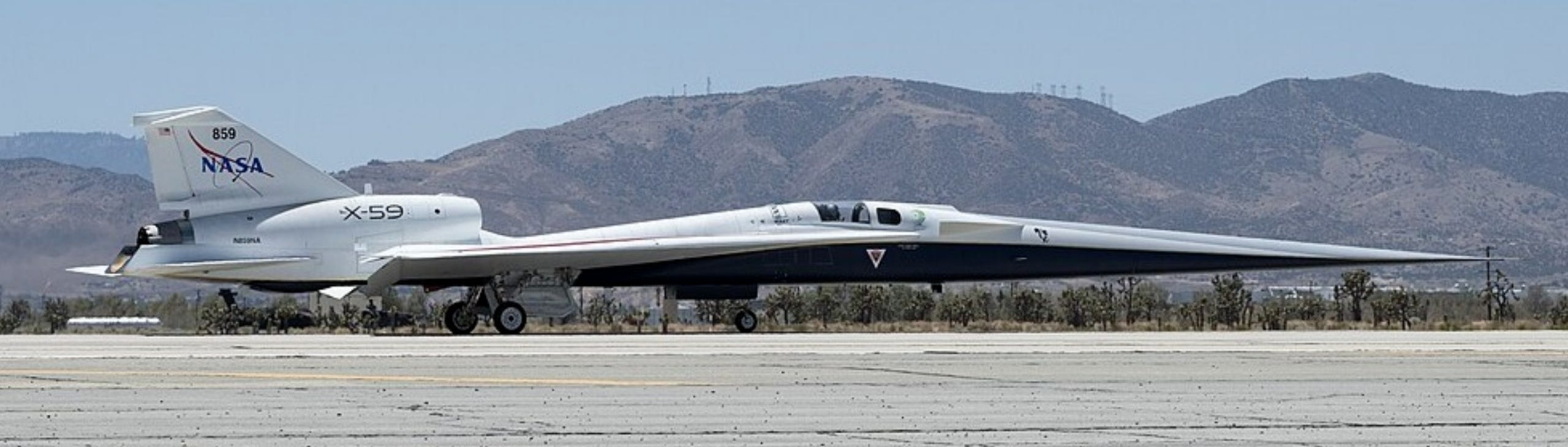
Even more interesting is that the pilot has zero forward visibility! He is dependant on cameras to be able to see foward. Shades of Charles Lindbergh!!!
A lot of the design work and math behind it are focused on ‘softening’ the crack of the sonic boom as it moves across the ground. If you’ve ever heard them, they are rather distinctive, and an oddity of the space shuttle was that it actually created two sonic booms from different parts of the airframe.
The long nose is supposed to ‘break up’ the boom, and the design of the tail is supposed to focus the noise ‘upward’, rather than down at the surface. Of course, the ‘seating’ would be a tad cramped, assuming there was a second seat, which there is not...
But if the math works, there are folks who would be very interested in upscaling the tech to a full sized aircraft capable of carrying passengers. The Concorde was the last true supersonic passenger transport, and even as big as it was, the ‘tube’ was extremely small, with only 100 seats total, in a 2x2 arrangement and very small overhead storage. And they were approximately $6000 one way from New York to London or vice versa but that was a three hour trip! Thank you
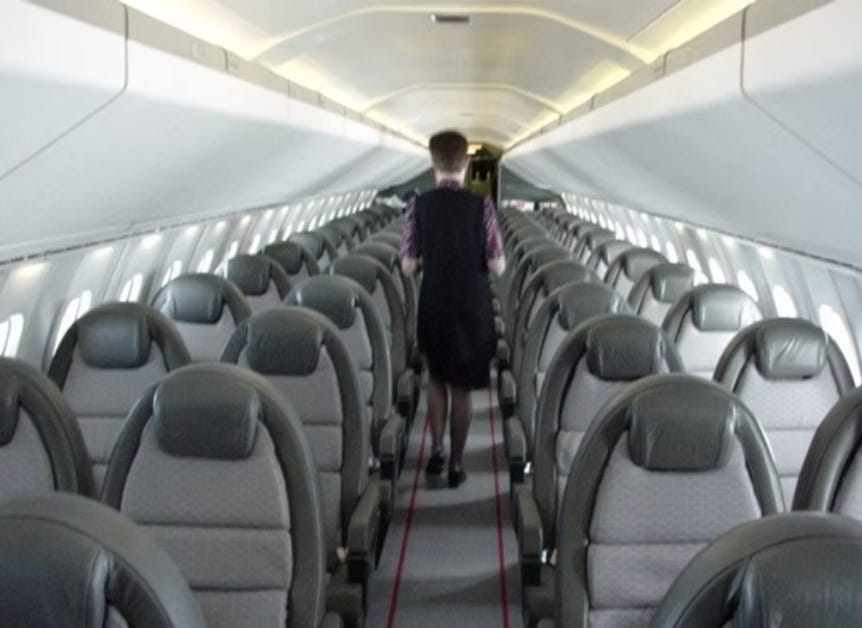
Heritage Concorde com
Who knows what it will cost when/if this new tech proves out? Or when it will be flying?
I know I probably will NOT be able to afford a ticket, nor do I really see a need to visit London...
I guess what I’m saying is that R&D isn’t quick, nor easy, nor does it always work out. So if, big if, they can make it work, so much the better. If not, well, lessons will be learned...
The old saying, "if we knew what we were doing it wouldn't be research" has some truth to it. Also, that the most exciting words to hear in a lab aren't "Eureka!" but "huh ... that's odd..."
But there is a difference between fundamental and applied (or, if you prefer, engineering) research. And it can get really annoying when something unrelated to the actual experiment you're trying to run slows you down.
Reminds me of the old X-3. Remember that? (Or the cartoon it spawned: Roger Ramjet?)
I'll admit I also find it a little weird that NASA is the one doing the research and not the USAF, this stuff used to all be in their purview. Then again, they just might not care? Which also makes me wonder if any of the US aircraft manufacturers or airlines are backing any of this?